
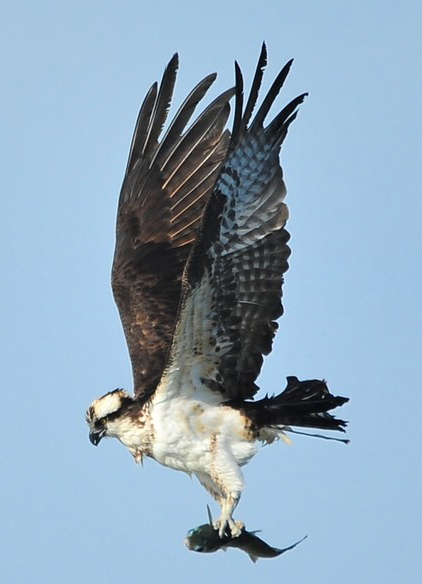
Ospreys are pescatarian, meaning they only eat fish. Because of this, according to experts like Javier Gonzalez, a resident naturalist educator at the South Padre Island Birding and Nature Center, they are some of the best fishers in the world. (Courtesy photo by Javier Gonzalez)
By JAVIER GONZALEZ

JAVIER GONZALEZ
Summer has technically come to an end last weekend (finally!) and fall bird migration will be nearing its peak soon. Birders are beginning to venture outdoors a bit more now as we get teased with slightly cooler weather.
Along the south Texas coast, nothing announces the fall season more than the high-pitched whistle-like calls of the Ospreys piercing through the air.
Ospreys have a wide range. They are found year-round along the eastern Gulf coast and southern Atlantic coast. During the summer, their breeding range extends up the Atlantic coastline, across Canada, dips down into the northwestern continental U.S. and stretches all the way north to Alaska.
Here in the Rio Grande Valley, it isn’t unusual to see a small number of Ospreys during the summertime, but mostly, they are seen more frequently in our area from fall to spring as wintering birds. The few birds we see hanging around in the summer are likely young birds, as Ospreys do not nest in deep south Texas.
During the winter, there is a large influx of birds that have migrated down from their northern breeding grounds to spend the season in our warm latitudes, especially along the coast, and they are starting to arrive now. Ospreys are pescatarian, so when their northern lakes freeze over, it’s hard for them to find food. The shallow and salty waters of the lower Laguna Madre offer plenty of fish for Ospreys seeking excellent winter fishing.
Want the entire story? Pick up a copy of the Port Isabel-South Padre PRESS, or subscribe to our e-Edition by clicking HERE!









Comments