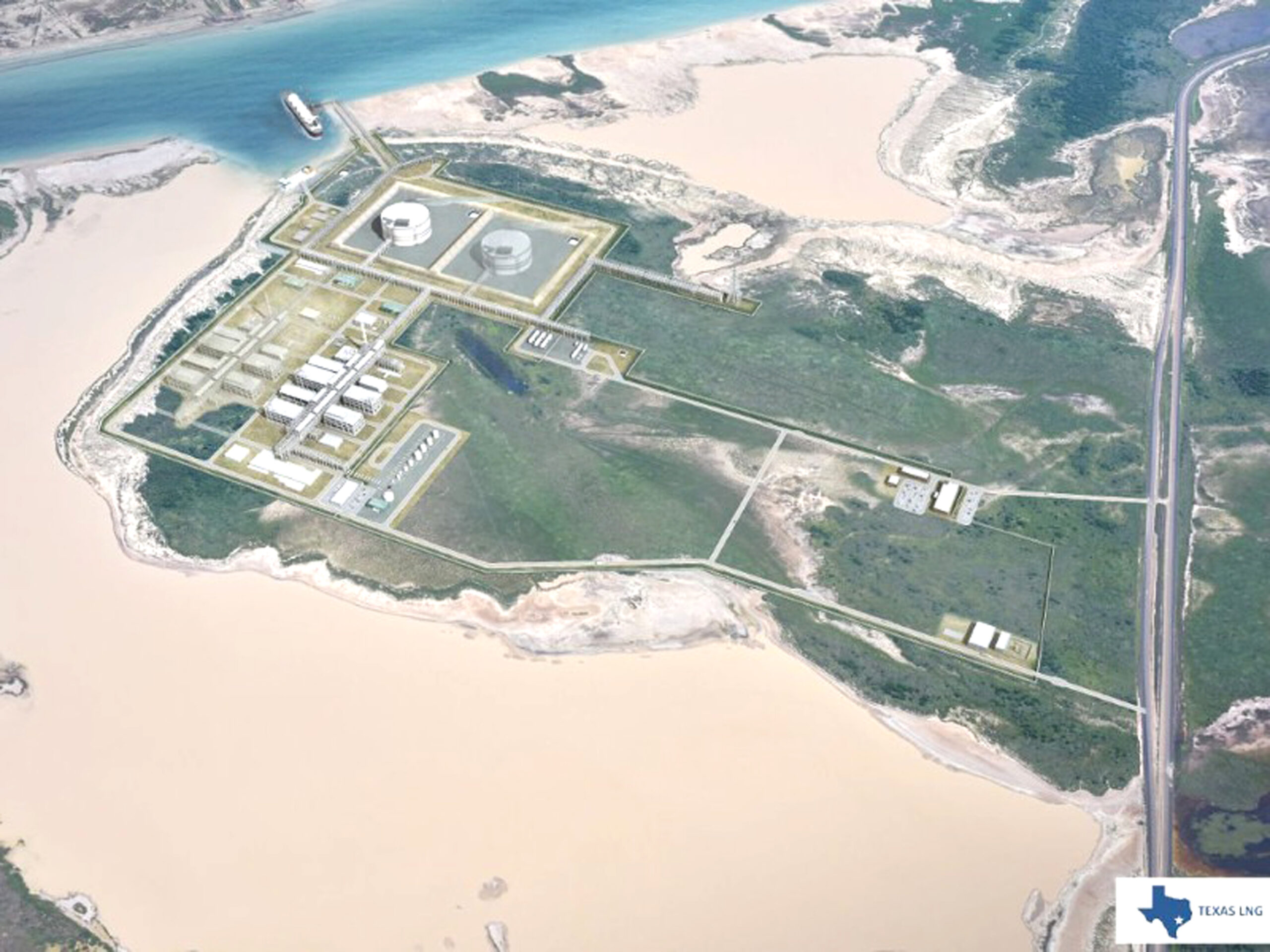
(Courtesy photo)
By CATHERINE DONNELLY
Special to the PRESS
In April, Houston-based NextDecade hosted an educational and hiring fair for the community at the Port Isabel Convention Center to present its $18 billion-plus, 984-acre Rio Grande LNG terminal project and to begin hiring workers in construction and various other positions.
Since then, three other projects have started to move forward along the same Port of Brownsville shipping channel: Texas LNG, the Rio Grande LNG Carbon Capture System, and the Rio Bravo Pipeline, all in various stages of planning or construction. The speed with which the sand dunes and wildlife are bulldozed along State Highway 48 is noticeable and shocking to motorists as they pass the site.
Liquid Natural Gas, or LNG, has been around for nearly a century since the first plant was built in West Virginia in the 1930s, and in its current form, LNG is touted as a safer, cleaner, lower carbon-intensive energy product.
Breaking Energy, in a 2014 article titled “How dangerous is LNG?” states that the ‘historical reality is that LNG has the best safety record of all common fuel types and is completely non-toxic. Of course, natural gas vapors are flammable and present safety hazards that must be managed, but these hazards are substantially less than for gasoline, diesel, and other liquid fuels.”
Enbridge has built, owns, and operates the Rio Bravo Pipeline which will supply NextDecade with LNG gas. NextDecade will likely be the first company in the Port of Brownsville to come online out of the current projects. According to their website, they will supercool the methane to -260 degrees Fahrenheit to turn the product into a dense, frozen liquid natural gas that reduces its volume 600 times, making it more efficient to ship to countries around the globe.
A quick inquiry on Google shows a history of LNG “release incidents” involving many companies since the 1940s, including deliberate and accidental leaks and the occasional unintended ignition of the gases. Most of these plants burn off their by-product emissions into the atmosphere on a continual basis, causing concerns in the local communities.
On June 9, 2022, a 450-foot-high fireball caused a fire at the Freeport LNG plant in Quintana, Texas, causing its temporary closure. Initial reports from private consultants stated that the causes stemmed from serious systemic issues such as the lack of formal procedures and training, “alarm fatigue” because of the presence of ongoing alarms for equipment that was not even in service, and long shifts causing operator fatigue, among other issues. When the Pipeline and Hazardous Materials Safety Administration (PHMSA) issued its official findings last month, Reuters validated the initial findings. Still, they reported that the blast was more precisely caused by overpressure protection and closed valves that were inadvertently removed.
The report further stated that “severely damaged” electrical wiring likely ignited the released gas from the pipeline breach and led to the fireball. The plant issued a statement saying it has “adopted procedural changes including enhanced safety valve testing processes and revised its control systems to alert operators about valve positions or temperature readings.”
According to the U.S. Energy Information Administration (eia), the United States is currently the number one exporter of LNG in the world in the first half of 2023. In an article a year ago, the Wall Street Journal reported that the Russian invasion of Ukraine had placed the U.S. in a unique position to corner the market of providing LNG to Europe and other countries that no longer get their supplies from Russia. This country is poised to more than double its current production over the next five years as each of the new projects currently in the pipeline comes online, according to BloombergNEF.
Pick up a copy of the Port Isabel-South Padre PRESS, or subscribe to our e-Edition by clicking HERE!







Comments