
Special to the PRESS
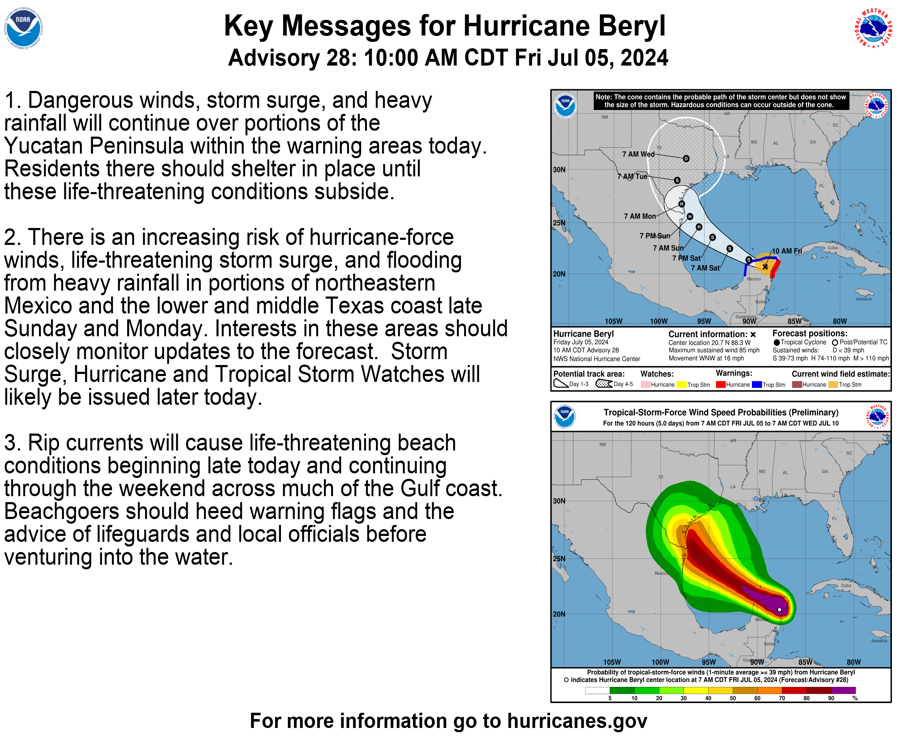
As the path of Hurricane Beryl continues to threaten the southern tip of Texas and the Rio Grande Valley, officials at FEMA are asking the public to stay abreast of the storm’s path and other conditions and to begin making plans in case the storm reaches the Rio Grande Valley.
As of the newspaper deadline Tuesday afternoon, Beryl was a Category 5 hurricane, bearing down on the Caribbean with 160 mph winds and moving toward midway between the west and northwest at 22 mph, but it had lost some of its strength once it passed through landfall and was predicted to further weaken as it moved across the Yucatan Peninsula later in the week.
The intensely powerful storm was upgraded to a Category 5 hurricane Monday night, making it the earliest Atlantic hurricane of that strength on record, according to the Associated Press. As of Wednesday, Beryl had already caused widespread damage in several Caribbean island nations and left at least two people dead as it swept across the region earlier in the week.
According to the American Red Cross (ARC), hurricanes are becoming more intense and more destructive as these storms bring increased rainfall and higher storm surges due to the worsening climate crisis. Of the 10 most costly weather disasters in U.S. history, eight are hurricanes.
These powerful storms not only cause problems for people in coastal areas but can also cause damage hundreds of miles inland. The ARC is preparing to respond if necessary and urges everyone to get ready too.
According to the ARC, coastal residents should decide how to best protect their homes from high winds and flooding by planning how to evacuate and shelter safely at home. Take three important steps, say Red Cross officials: get a kit, make a plan and be informed.
Some people may need extra attention during an emergency. For them, planning ahead is crucial. And ARC stresses that residents living along the storm’s path shouldn’t forget to include pets in their plans, as they depend on people for their safety.
STEPS FOR OLDER ADULTS
• Understand how medical, physical and cognitive needs may affect the ability to respond to an emergency.
• Consider what may be needed if the power goes out, if older adults are forced to stay home for two weeks or more, or if they are forced to evacuate.
• What help do they need, and who can help?
• Identify helpers, which include family, friends, neighbors, caregivers and care providers, to build their network of people who may be able to assist them or that they can assist.
• Meet with helpers to assess their needs and plan together.
• If they require power to operate medical devices or keep medicines cold, make a backup plan.
• Keep at least 30 days of medications and extra items, such as a cane or eyeglasses. Plan for food needs if a special diet is followed.
• Acquire batteries to back up devices that require power.
• Keep an up-to-date list of medical information: conditions, allergies, medications, prescription records, doctors and insurance cards.
PEOPLE WITH DISABILITIES
Mobility, hearing, learning, or seeing disabilities can create specific needs for individuals responding to an emergency.
Create a personal support network and make a plan after thinking about these topics:
• Do they regularly need assistance with personal care? Do they use adaptive equipment to help those who need assistance get dressed? Do they use a shower chair, tub-transfer bench or other similar equipment? Do they use special utensils that help prepare or eat food independently?
• How would they continue to use equipment that runs on electricity? Do they have a safe backup power supply, and how long will it last?
• Do they need a specially equipped vehicle or accessible transportation?
• Do they need help leaving their home or office? Can they reach and activate an alarm? Will they be able to evacuate independently? How will they call for help to leave the building?
• Will they be able to care for their service animals during and after a disaster?
• If they use a wheelchair, make exits from their home wheelchair accessible. If they use an electric wheelchair or scooter, have a manual wheelchair as a backup.
• Know how to connect and start a backup power supply for essential medical equipment.
• If they are vision impaired, deaf or hard of hearing, plan ahead for someone to convey essential emergency information to them if you are unable to use the TV or radio.
CREATE A PET EMERGENCY PLAN
The Red Cross encourages people to develop emergency preparedness plans for themselves and their pets. When possible, Red Cross shelter workers will do all they can to accommodate domesticated pets comfortably, however, depending on the situation, pets may need to be housed in a different location. Service animals that assist people with disabilities are allowed in Red Cross shelters.
The ARC encourages these individuals to know which hotels and motels along evacuation routes will accept pets in an emergency by calling ahead for reservations if they know they may need to evacuate. Ask if no-pet policies could be waived in an emergency.
• Know which friends, relatives, boarding facilities, animal shelters or veterinarians can care for animals in an emergency. Prepare a list with phone numbers.
• Include pets in evacuation drills so that they become used to entering and traveling in their carriers.
• Make sure that pets’ vaccinations are current and that all dogs and cats are wearing collars that are securely fastened and have up-to-date identification.
• Consider having pets “microchipped.”
• Create a pet emergency kit and place the following items in a sturdy, easy-to-carry container: Sturdy leashes, harnesses and/or carriers to transport pets safely and ensure that they can’t escape; food, drinking water, bowls, cat litter or pan; a manual can opener if your pet eats canned food; medications; copies of medical records stored in a waterproof container; a first aid kit; and current photos of the pet owner with their pet(s) in case they get lost. Since many pets look alike, this will help to eliminate mistaken identity and confusion. It is also suggested that information on feeding schedules, medical conditions, behavior problems, and the name and number of the pet’s veterinarian be included. Finally, pet beds and toys, if easily transportable, should be included.
MORE GOOD STEPS TO TAKE
• The public is encouraged to download the free Red Cross First Aid app to know what to do if emergency help is delayed and the free emergency app for weather alerts, open Red Cross shelter locations and safety steps for different emergencies. App users can choose whether they want to view the content in English or Spanish with an easy-to-find language selector.
• Pet owners can download the Red Cross Pet First Aid app for more information on how to include pets in emergency preparedness plans, step-by-step instructions for first aid emergencies and more. Find these and all of the Red Cross apps in smartphone app stores by searching for the American Red Cross or going to redcross.org/apps.
• Put a first-aid kit together. Find out what should be included.
• Print the Red Cross preparedness checklist, available in several different languages.
• The public is also encouraged to take a class to learn what to do in an emergency. A variety of online, in-person and blended courses are available, including the ARC’s Until Help Arrives online course. Pet owners can take the Red Cross Cat and Dog First Aid online course to learn what to do in an emergency until veterinary care is available. People can access the course on their desktop or tablet at redcross.org/catdogfirstaid.
ABOUT THE AMERICAN RED CROSS
According to their website, the ARC shelters, feeds and provides comfort to victims of disasters; supplies about 40% of the nation’s blood; teaches skills that save lives; distributes international humanitarian aid; and supports veterans, military members and their families.
The Red Cross is a nonprofit organization that depends on volunteers and the generosity of the American public to deliver its mission. For more information, visit redcross.org or cruzrojaamericana.org, or visit us on Twitter at @RedCross.








Comments