
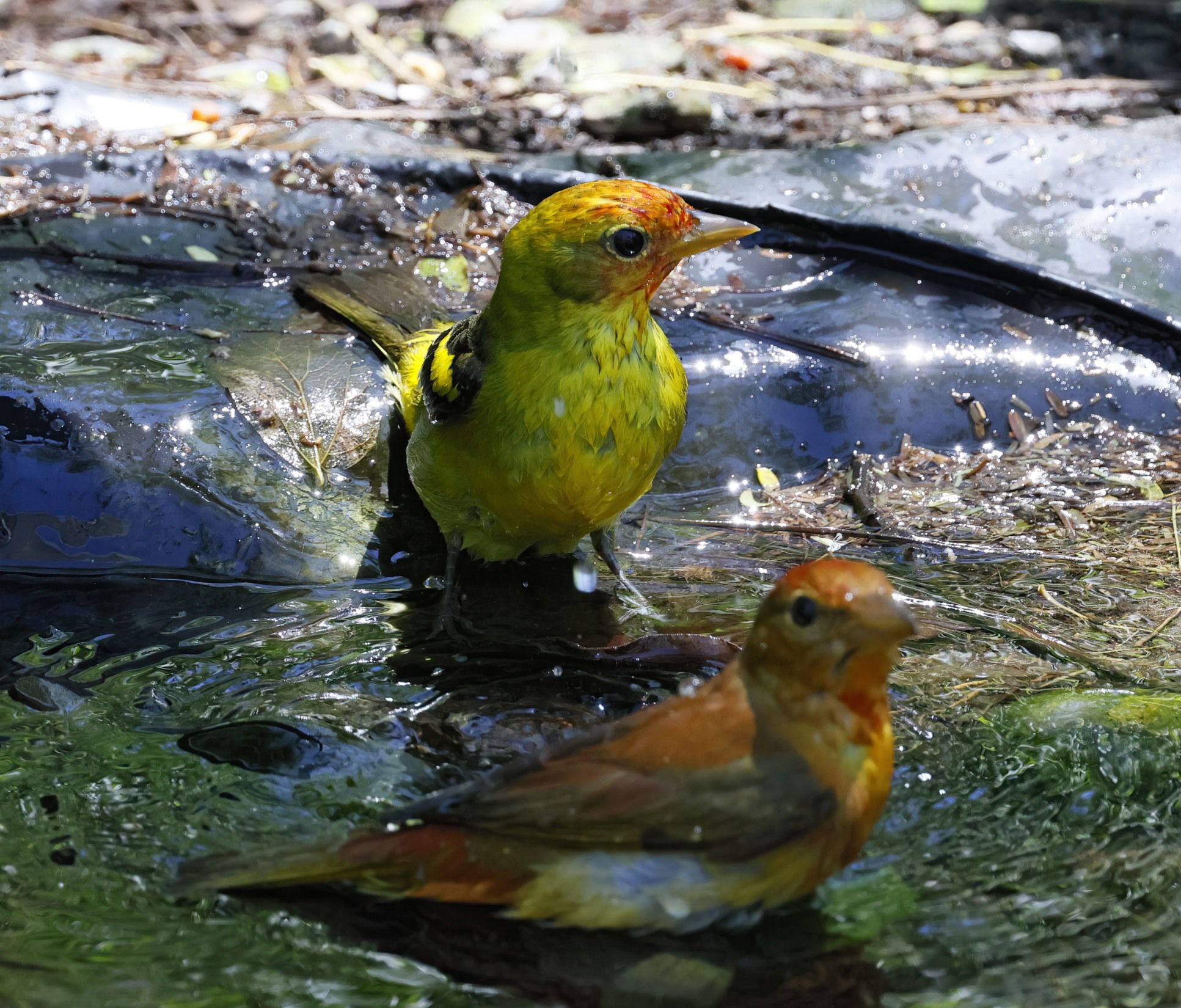
(Photo courtesy/Mary Volz)
By: Roberto Gaitan
Did you know, of the 10,000+ bird species worldwide, roughly 2,059 are found in North America of which approximately 635 have been recorded in Texas. Plus, 333 out of 338 long-distant migrant species in North
America have been recorded in Texas. Within the Rio Grande Valley, about 500 bird species have been recorded, with half of them being migrants.
May 10th was the Spring celebration of the bi-annual World Migratory Bird Day (worldmigratorybirdday.org). The two days of the year are designed as awareness-raising campaigns to highlight the need for the conservation of migratory birds and their habitats. It is an effective tool to help raise global awareness of the threats faced by migratory birds, their ecological importance, and the need for international cooperation to conserve them.
Locally, we too need to find ways to balance development and growth while maintaining a native habitat for our local and migratory birds. And simply planting native trees is not enough. A proper habitat includes
all layers of our forest environment. From the high canopy, tree, sub-tree, shrub and groundcover layers, each provides unique features that different birds need.
Vultures, hawks, swallows, and swifts will perch on top of the high canopy while owls, woodpeckers, vireos, thrushes, tanagers, and warblers will rest within the canopy trees. Warblers, green jays, chickadees, and
cardinals will be found within the tree and sub-tree layers, and mockingbirds, wrens, and doves look for seeds, fruit, and insects in the low shrubs. Along the floor’s ground cover, sparrows, shorebirds, waterfowl, and wading birds find their home.
As migratory birds stop in the RGV to rest during their long journey, each bird type will seek the habitat layer they prefer. The native plants within their layer, synchronized to nature’s seasonal clock over thousands
of years, flower and produce fruit and seeds, timed to the bird’s migratory schedule. Changes taking place in our climate are difficult for birds to adapt to, so the senseless removal of our native habitat may prove fatal
to our birds and other wildlife.
In 2019, scientists reported that 1 out of 4 birds in the United States and Canada had disappeared during the prior 50-year period. This 25% decline, roughly 3 billion birds, were lost due to pesticide use, to cats, to
window strikes, and lost habitat. While this alarm was raised in 2019, the latest reports indicate that we have not done enough to slow or reverse the decline.
While we can limit or preferably eliminate pesticide use, keep cats indoors, and apply stickers to make glass visible to birds, the loss of habitat takes time to restore. Trees, shrubs, and herbaceous plants may be
bulldozed in a day, but will take decades to return, if space is available to replace the room the latest candy shop, t-shirt shop, or convention center remodeling will remove from our greenspace.
So as you tend your garden, your native plants, your native habitat, listen for the thank you from the migratory birds that will be stopping by to refuel, to recharge, before continuing their amazing Spring travels.
Let’s try to ensure they have the space they need when they return in the Fall.








Comments