
By TRINA ‘INDI’ JOHNSON
Special to the PRESS
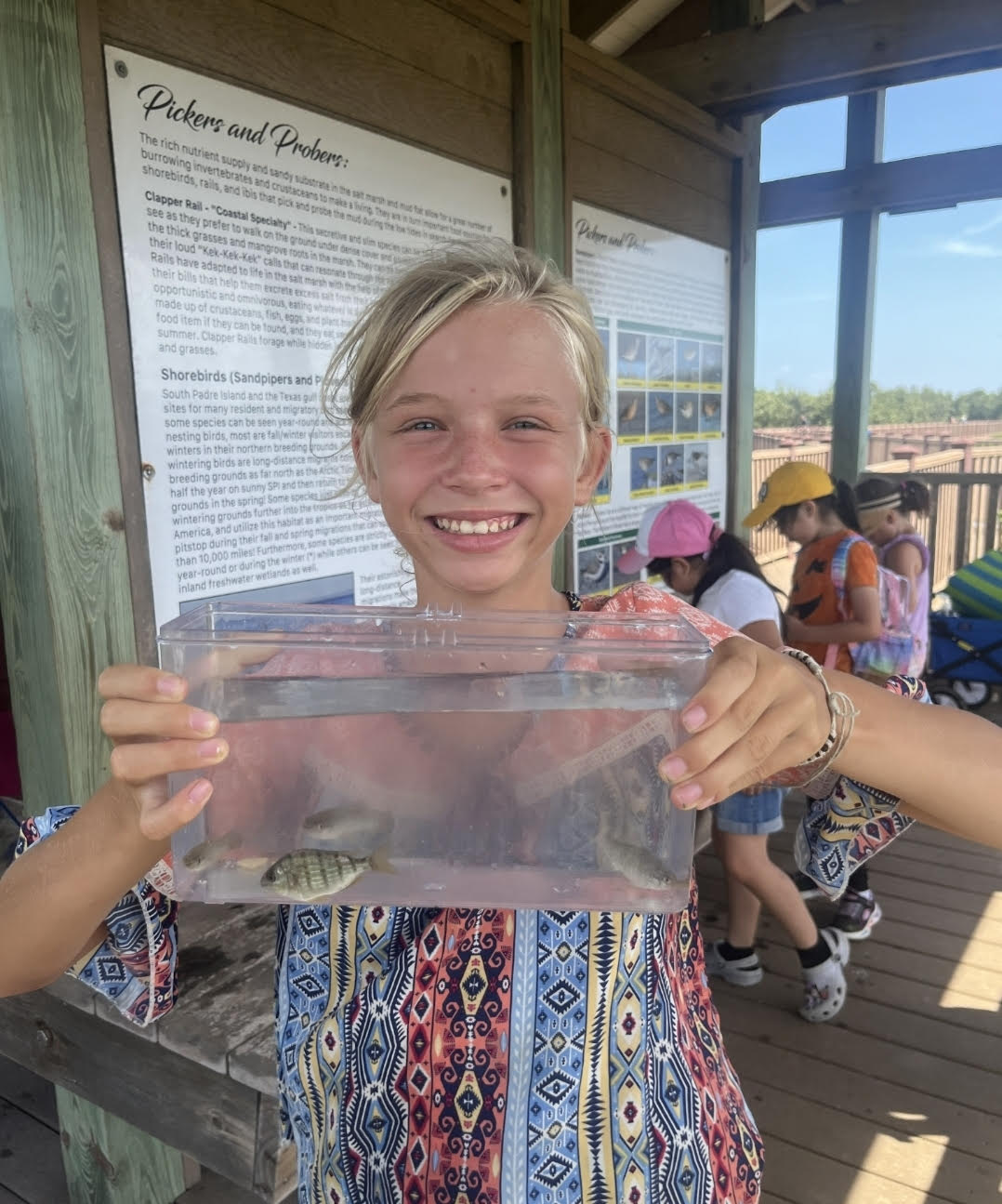
A fish species not previously documented as part of South Padre Island’s wildlife was discovered last week by campers attending the SPI Birding and Nature Center’s Coastal Nature Camp.
The fish, a fat sleeper, or Dormitator maculatus, was pulled from the last of three traps placed in a freshwater pond during a hands-on lesson for children ages 8 to 12. Though small in size, the find sparked
immediate curiosity among the group.
“It was our third day of camp, and we were learning about fish species in the Laguna Madre,” said Javier Gonzalez, naturalist educator at the center. “We had traps placed in different habitats along the boardwalk.
That final trap, dropped into a deep hole in the freshwater section, brought up the fat sleeper.”
The initial belief was that the species had never been recorded on the island. But a review of the iNaturalist database later showed two prior sightings, both captured in photographs taken by visiting birders who had
spotted the fish inside the beaks of Green Herons.
Despite those earlier records, Gonzalez said the camp’s capture marked the first hands-on confirmation at the center. “I had hoped we might find something new, so it was a great surprise for it to happen in that final
trap,” he said. “Fish that aren’t considered sport fish are often overlooked, so it was exciting to catch one we hadn’t seen before.”
The fat sleeper is part of the Eleotridae family, closely related to gobies, and can be found from North Carolina to Brazil along the Atlantic and Gulf coasts. Its body is thick and slightly flattened, with a blunt snout and radiating dark lines from the eyes, features that allow it to bury into mud when threatened.
Its presence on the island had been considered unlikely due to the surrounding saltwater, but Gonzalez pointed to an important manmade factor. “They prefer freshwater habitats, and the outflow from the city’s water treatment plant created that environment here. Without it, this part of the island wouldn’t be suitable.”
The fish’s behavior at the time of discovery left a brief moment of confusion. “When I pulled the trap out, I thought they were dead because they weren’t moving,” Gonzalez recalled. “Then we found out their name,
and it made sense.”
Verification of the species was confirmed through iNaturalist, a community science app that helps identify flora and fauna through photo uploads. “It’s always interesting to see how our dual wetlands, both saltwater
and freshwater, attract different species and how they distribute themselves based on salinity tolerance,” Gonzalez added.
Although the fat sleeper is unlikely to become a regularly monitored species at the center, staff and campers alike hope to encounter it again during future sessions.
The Coastal Nature Camp, hosted by the SPI Birding Nature Center and Alligator Sanctuary, is designed to introduce children to wetland ecology through interactive lessons in water testing, bird surveys, and species
identification. With space limited to 10 participants per session, the program offers an immersive experience in the island’s rich and often surprising ecosystem.








Comments