By JACQI LEYVA- HILL & MARY GRIZZARD
Special to the PRESS
The holiday season is officially underway in the Laguna Madre region, and for Port Isabel’s shrimping fleet, December marks one of the busiest and most important periods of the year. As families across Texas prepare Christmas menus and seafood platters, demand for local Gulf shrimp spikes, turning the city’s docks into a hub of early-morning activity.
Shrimp boats have been heading out before sunrise, navigating cooler waters and changing Gulf conditions that can influence both catch size and timing. While the season began in mid-summer, December consistently remains a peak month for landings, sales, and distribution.
Local shrimpers say this year’s early winter pattern has been somewhat favorable, with steady catches for boats returning through the Port Isabel Channel. However, fluctuating winds and cold fronts, typical for December, mean many captains are watching the weather closely before deciding how long to stay out at sea.
At White’s Seafood Market and other Port Isabel suppliers, workers have been preparing for the holiday rush. Many Winter Texans who have already arrived make shrimp purchases part of their weekly routine, supporting the docks and visiting local seafood houses during their stay.
“I grew up coming to the Island with my family every Christmas and New Year’s always looking for Gulf shrimp,” one longtime Winter Texan Tony L. shared. “We love the local, wild caught shrimp.”
The economic ripple is felt across the Laguna Madre area. South Padre Island restaurants begin planning holiday menus that highlight Gulf shrimp dishes, while local food trucks and caterers stock up for private events and seasonal visitors.
Environmental conditions, including water temperature and salinity, continue to shape the season. Texas Parks & Wildlife biologists note that the fall-to-winter transition can produce mixed results for brown and white shrimp populations, though Port Isabel’s fleet has long adapted to seasonal ebb and flow, according to the Texas Parks & Wildlife Coastal Fisheries Division.
Despite higher fuel costs and ever changing Gulf conditions, many boat owners say they’re optimistic heading into the final stretch of the year. Holiday demand provides a welcome income boost before the slower months of January and February.
For residents and visitors, buying shrimp directly from Port Isabel’s docks not only supports local fishermen, it preserves a long standing coastal tradition that continues to define the character and flavor of the region.
Spotting SPI’s Ghost Shrimp
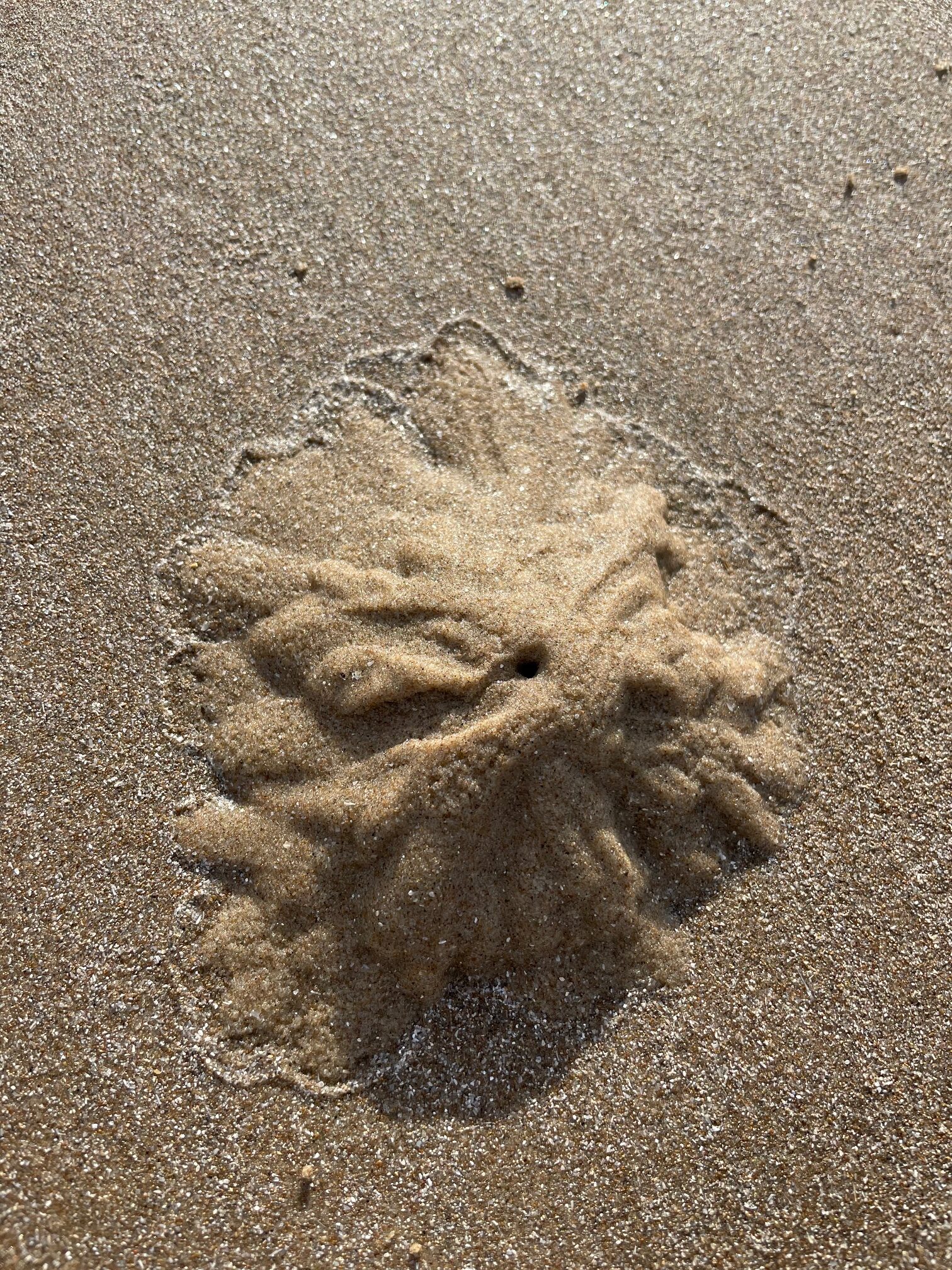
South Padre Island beachcombers walking along the swash zone — that ever-changing place on the shore where the breaking waves wash up on the beach and then slip backwards into the Gulf waters — often come across areas peppered with dozens, even hundreds, of miniature mud “volcanoes,” particularly at low tide. Upon closer inspection, some of these “volcanoes” even seem to be erupting as muddy water burbles from their central craters and flows down their flanks. The first time the phenomenon is seen, it seems a foregone conclusion that some kind of living organism is dwelling within the tiny mud mountain. What kind, though, is unknown until an angler on the beach one morning appears with a two-inch-wide, three-foot-long white PVC pipe with a plunger handle at the top. He places the open end of the pipe on the summit of one of the volcanoes. “It’s a ghost shrimp extractor,” he explains. “It sucks them out of their burrows. Ghost shrimp make great surf fish bait!”
Ghost shrimp are a crustacean actually more closely related to crabs than to shrimp. There are four separate species that live along Gulf shores, according to the Padre Island National Seashore website. All species live in the intertidal zone in a complex of subterranean burrows, sometimes going as deep as four feet. These tunnels are kept patent by a mucous lining that the ghost shrimp secretes as it burrows. They seldom leave these tunnels and most people, apart from anglers with suction devices, will never encounter them but only see the evidence for their existence by their mud mounds. Ghost shrimp’s unseen burrows are an important part of the intertidal ecosystem, bringing oxygen into the ocean sediments, which helps the organic matter present there to decompose and disperse as nutrients throughout the sand.
Ghost shrimp are thin and relatively small, up to 3”–4” in length, and are an opaque white with clear to pinkish orange coloration in their midsections. Their paleness is the origin for their common name “ghost.” They are filter feeders, dining on the phytoplankton and other organic detritus that move through their water-filled burrows. They contribute to this movement of water by waving their pleopods, which are tiny abdominal appendages. Food particles are captured by other limbs on their abdomen and then moved up to their mouths.
Some people eat ghost shrimp, describing the meat as tasting similar to true shrimp with an added crunch. But because they are so small and have relatively little flesh, they are most often only harvested for fish bait. What does eat them regularly are shorebirds, who utilize them as an important food source, particularly during migration. As ghost shrimp extractors grew in popularity a few decades ago, making it easy to obtain this much-sought-after bait, ghost shrimp became in danger of being overharvested. To protect both them and the intertidal ecosystem in which they live, Texas Parks and Wildlife set a daily limit for harvesting ghost shrimp at 20 per day in 1998.
The next time someone is walking the South Padre Island shoreline and finds themselves in the midst of a ghost shrimp volcanic field, they should remember what unique and important creatures live in these mini mud mountain ranges. And if they see an angler nearby with a drywall bucket and extraction device, they might ask them to show their catch and experience these bizarre-looking denizens of the intertidal sands.







Comments