By Steve Hathcock
Only one small skirmish occurred on Padre Island during the Civil War. The encounter was so brief that local newspapers referred to it as “The Affair on Padre Island.”
For all practical purposes, the Island was deserted at the onset of the Civil War. Union troops periodically landed on its beaches to secure fresh meat from the herds of cattle that roamed freely here. Occasionally, Southerners would endeavor to transport cotton across Padre Island and load it onto ships standing offshore in the Gulf, but, with Union warships patrolling just beyond the horizon, this was always a precarious occupation at best.
On July 17, 1862, Company K, made up of Confederate volunteers from nearby Seguin, Texas was ordered to the Aransas Pass to help the defense of Corpus Christi. With a detachment of seven men, Captain John Ireland crossed Corpus Christi Bay in a small boat, the Queen of the Bay, to determine if Corpus Christi Pass dividing Padre and Mustang Islands, was deep enough to allow ships to enter the bay.
As they checked the water depth, the Confederates became aware of the Union bark Arthur approaching from the Gulf.
Stopping just offshore, the Arthur lay in the shallow waters observing them. (A bark is a small sailing ship with three masts whose sails are fixed breadthways except for the last mast, which has its sail running lengthwise.)
Finished with their reconnaissance, Ireland and his men returned to the Queen of the Bay and cast off. As they retraced their way across the bay, they noticed they were being followed by two large boats that had launched from the Arthur.
Realizing they could not escape, the Confederates ran their boat ashore. After securing their craft, they began firing upon the Union launches. The Federal troops quickly landed on Mustang Island, on the other side of the pass, and returned fire.
Unfortunately, they forgot to anchor their boats, which promptly drifted out into the pass. Dodging bullets, Captain Ireland waded into the shallow water and snared one boat while a soldier named Jack Sands seized the other before it drifted out into the Gulf. The Confederate patrol returned to Corpus Christi in the Queen of the Bay with the captured launches and all the weapons and equipment they contained, including a wounded Union soldier found in the first launch. Meanwhile, the Union troops waited on Mustang Island for another boat to retrieve them.
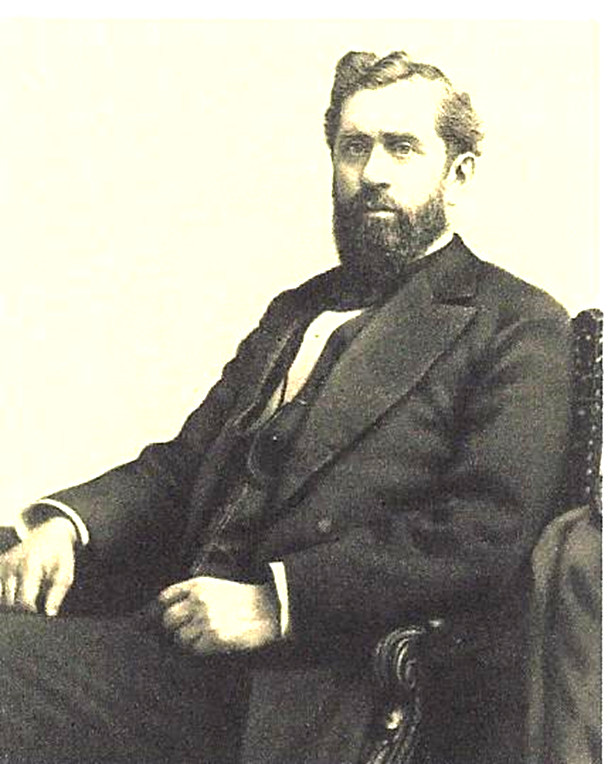
After the war, Ireland, who was a lawyer, became active in local politics. He ultimately became Governor of Texas in the 1880s.
As a side note, Governor Ireland resisted demands to use non-native limestone in the construction of the new capital building. Instead, he chose the beautiful red stone found at nearby Granite Mountain, located in Marble Falls some seventy miles west of Austin. Its owners donated enough granite to build the entire State Capital Building. Convict labor was contracted for the tremendous task of cutting the granite into blocks for shaping. Mule-drawn flat cars were used to haul the blocks to the dressing and shaping grounds at the quarry. A narrow-gauge railroad was specially built to haul the 15,700 carloads of granite from the quarry to the Capital Building site in Austin. The Texas Capital is second in size only to the United States Capital Building in Washington D.C. When constructed, it was said to be the seventh-largest building in the world.








Comments