
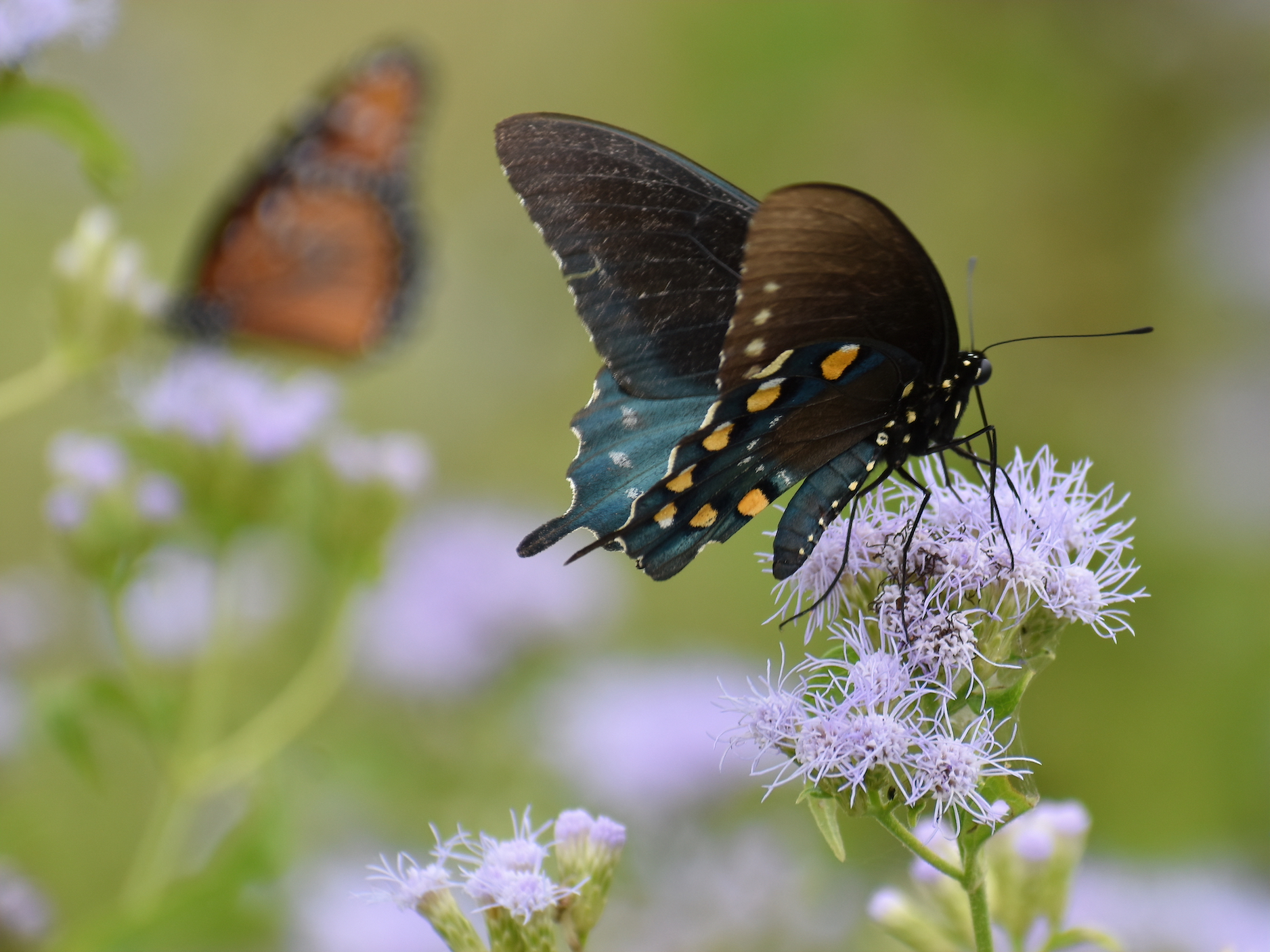
Pipevine Swallowtail
 Roberto Gaitan is the President of the Rio Grande Valley Chapter – Native Plant Society of Texas. The Chapter has recently taken over operations and management of the RGV Native Plant Center on South Padre Island.
As we approach the annual fall butterfly explosion, that time of year when you cannot help but stop to stare at the shear abundance of flying color, now is the time to ensure your garden is ready with enough nectar plants. Butterflies rely on the sugar water of plants to fuel them through their adult stage. While the Monarch butterflies’ great generation famously trek thousands of miles from the north to winter in the mountains of Mexico, some butterflies will take
shorter migratory journeys, and others fly to mate and lay their eggs for their offspring to hide in our brush, leaves and soil for next year’s spring season.
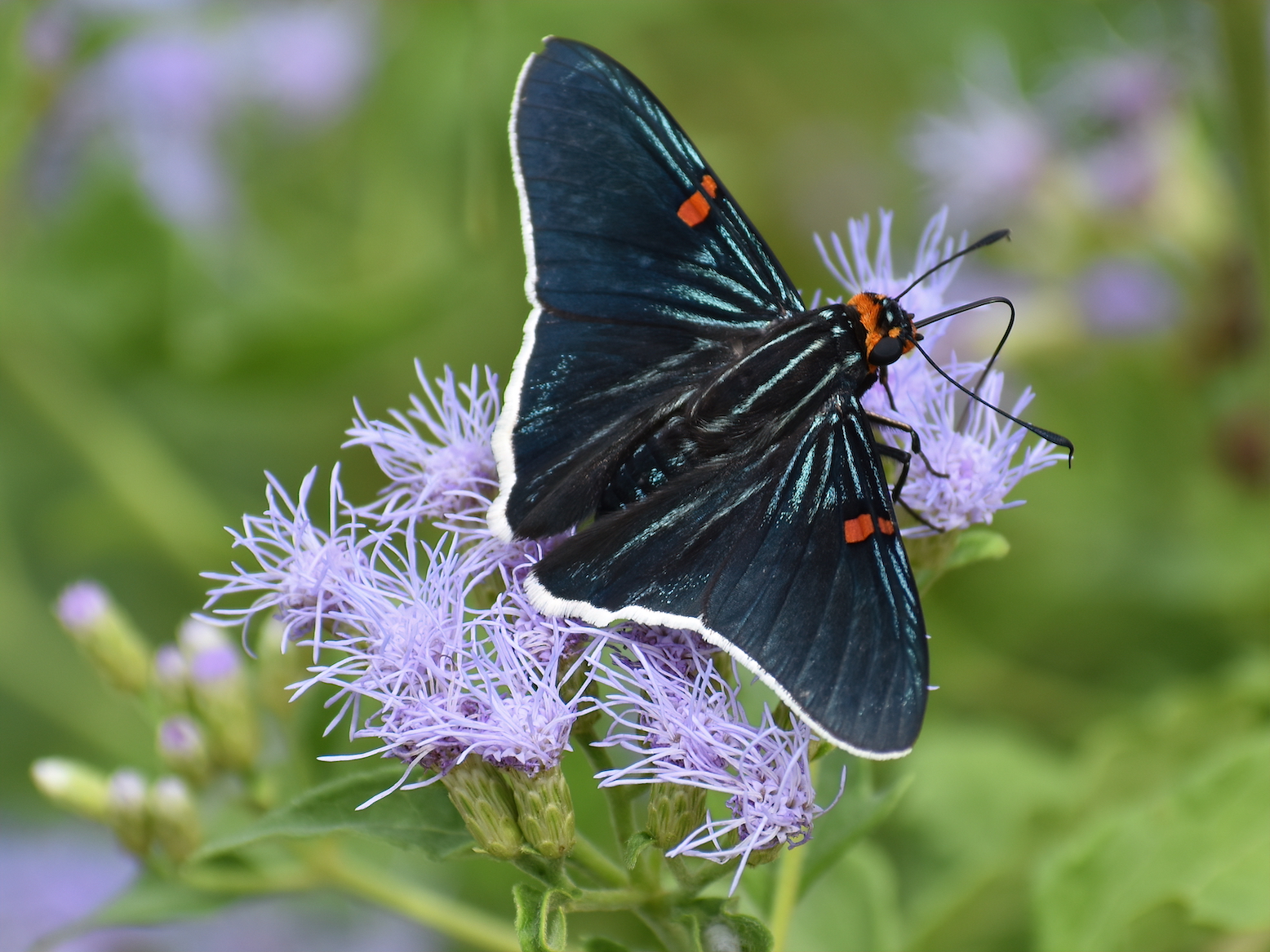
Guava Skipper
Besides planting many host plants for butterflies, offering a diverse selection of nectar plants is crucial. But if you had to choose one plant for your garden, select mistflower, an absolute butterfly magnet. (By the way, you will be
helping all pollinators with mistflower including our nighttime moths which studies find play a huge role in pollination.)
There are three types of mistflowers available for the Rio Grande Valley. The Padre Island Mistflower or Betony Leaf Mistflower (Conoclinium betonicifolium) was presented previously by my colleague Mary Grizzard (July 4-10,
2024, PI/SPI Press) and is an important species for the four counties of the Lower RGV, but usually is found in our coastal region. Our other two mistflowers are Crucita (Chromolaena odorata) and Blue Boneset (Tamaulipa azurea).
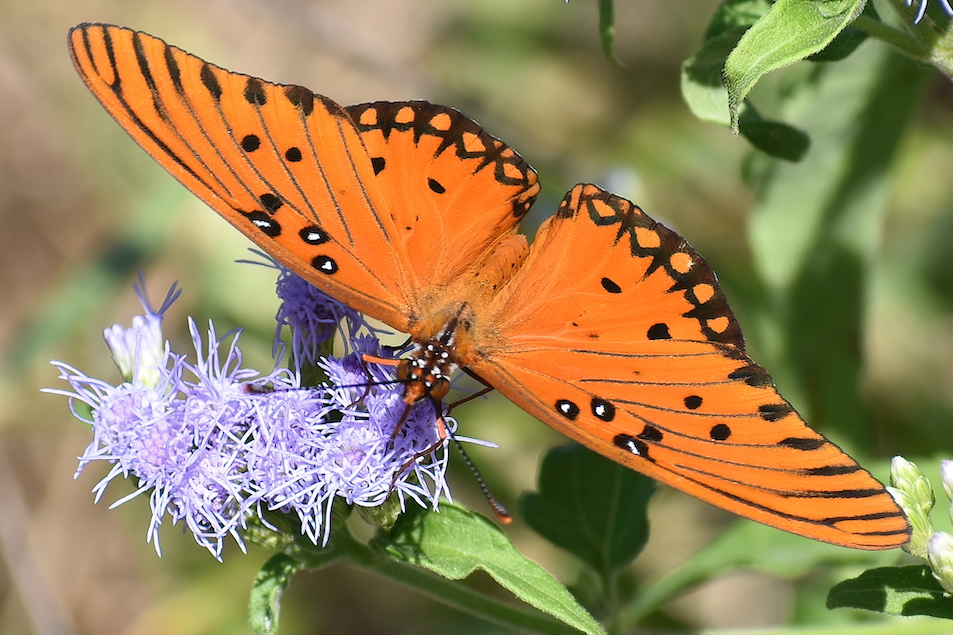
gulf fritillary
There is a fourth mistflower that is often overlooked. The White Mistflower (Fleischmannia incarnata) is a dainty and sprawling version of its larger, showy cousins.
Crucita is also called Fall Mistflower because, though it will bloom year-round, it shows off in the fall. Similarly, Blue Boneset is called Spring Mistflower because its bloom peaks every spring. You can distinguish these two mistflowers by their leaves. Crucita’s leaves have been described as Christmas Trees (a fall event) with sides of the triangular leaves longer than its base. Blue Boneset’s leaves are shaped more like equilateral triangles but can be oval-shaped.
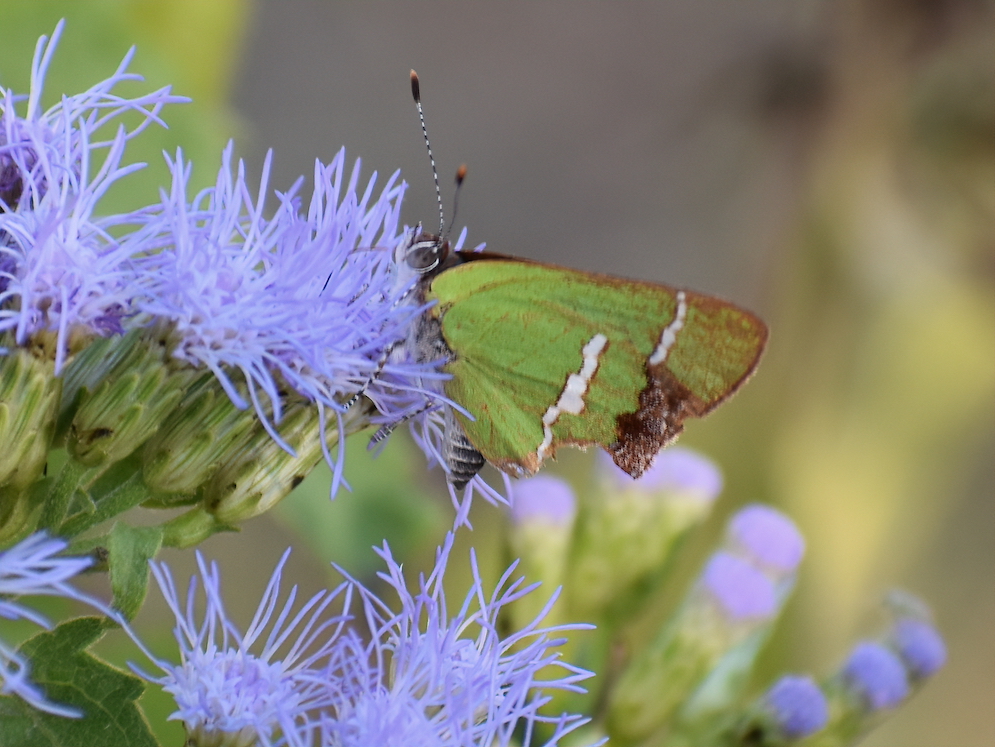
silver-banded hairstreak
Mistflowers are in the Asteraceae Family, which is also called the aster or daisy family of flowers, and contain over 2500 species. This family is also called the Compositae family because of its unique flower structure that
incorporates multiple flowers on a single head. On the common sunflower, a member of this family, the yellow petals we quickly recognize are the outermost flowers of the plant head. Within the ring of yellow flowers or ray flowers,
are thousands of individual flowers or florets which together is called a disc flower or disc floret. Each floret, if pollinated, will develop a seed.
In reality, a seed, like a sunflower seed, is actually a dry fruit. Known as an achene, it is ‘dry’ because of the hard, dry shell that encapsulates the true seed. The hard shell we throw away to get to the seed inside is the hardened ovary wall.
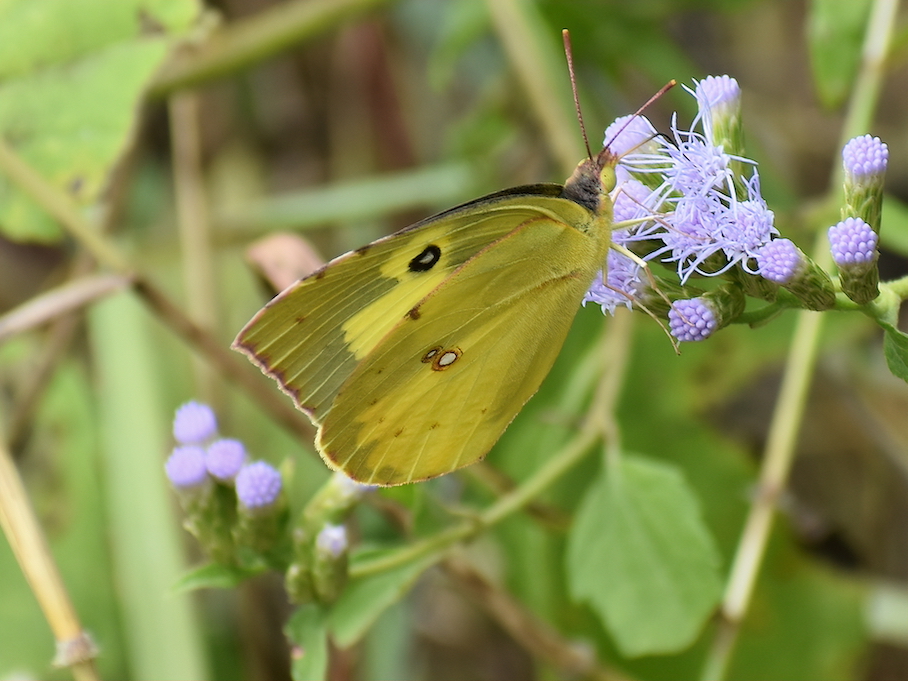
southern dogface
Interestingly, mistflower flowers do not have ray flowers. Their flower head consists only of florets. The Crucita’s disc flower is pinkish or blue and the Blue Boneset’s are bluish but sometimes white. White Mistflower may have a purple, white or pinkish disc floret. All produce seeds on tufts of hairs called pappus bristles, similar to what is seen with thistles and dandelions, which help with wind dispersal. Seeds not eaten by wildlife such as birds and insects, will spread. Thus, mistflowers are self-seeding annuals, though you may have plants live multiple years.

swallowtail
Do not worry if your garden is not ready; there is still time. The native plant nurseries in the RGV can help you select your native plants in preparation for this year’s fall butterfly show. Make sure to ask about our native mistflowers. Plant a few and you will be amazed by the butterflies they attract.









Comments