
David Woods is a South Padre Island fishing guide with over 20 years of experience. He is the author of three books offering expert fishing advice.
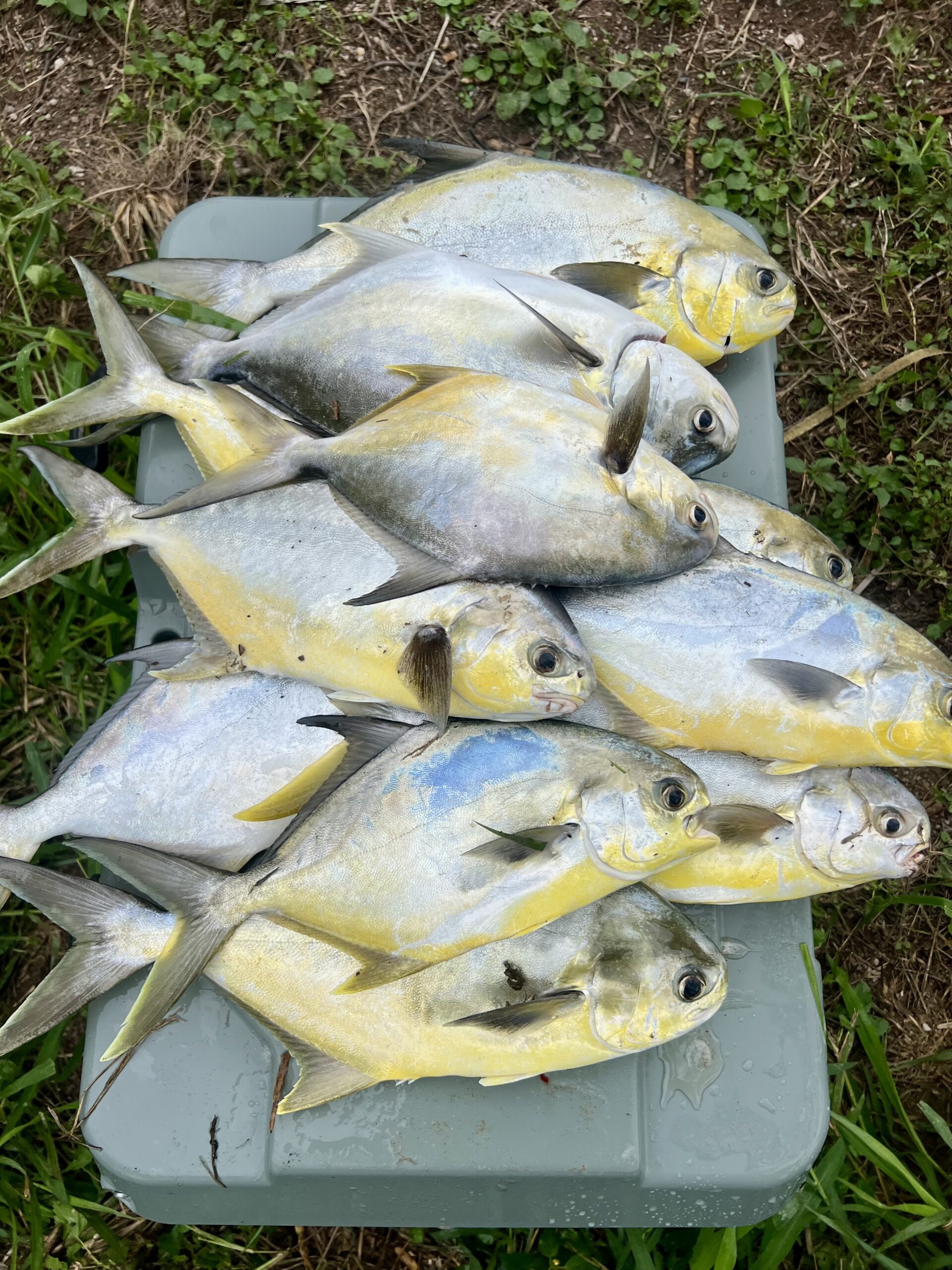
It’s still pompano season out there! Although the official name is the Florida Pompano, they are more than comfortable to call it home here in Texas too. But what’s in a name, anyway?
Pompano are a hard-fighting, golden-yellow member of the jack family, closely related to bluefish. If you fish with some cut fish in the surf alongside your shrimp rigs, you might even catch a few bluefish right now too. Both are present in the Texas surf. Unlike the voracious bluefish, however, pompano do not have teeth, at least like we think of them, and are strictly invertivores. Their diet consists entirely of invertebrates: shrimp, clams and other mollusks.
The pompano’s favorite food is the diminutive coquinas, small multi-colored surf clams that you might see uncovered by breaking waves in the wash zone before they bury themselves in the wet sand again. Make sure you look for the coquinas in a part of the beach that hasn’t been compacted by vehicle traffic of any kind. Compacted sand areas don’t have the coquinas or many other interesting wash creatures like less compacted areas of the beach that see a little less traffic. Wherever you find coquinas is usually a pretty good spot to fish.
You can catch pompano at the jetty or in the surf on dead or live shrimp, as well as artificial jigs. They seem to like orange and yellow colors the best. I have good luck with artificials on incoming tides and just the opposite, preferring to fish with live or dead bait on outflows. Pompano position themselves deeper during outgoing tides, but always in similar areas, near bar breaks, on points, and around cuts. Pompano are one of the fish that I seriously target over others. I won’t box redfish or speckled trout if I am on the pompano. I tend to forget that other fish exist while the bite is on, concentrating my effort on the pompano until they have moved out again.
Pompano are a temperature-sensitive fish, having a narrow range they find comfortable. If its too warm or cool, the pompano will move on to a better location. The Goldilocks range for them is about 65-72 degrees. Outside of that water temperature range, pompano will school up and follow the cooler water offshore and stay in it the rest of the summer where they column spawn during full moons like many other marine fish. A large female starts first, spiraling up through the water column with the other fish, following in a conical formation, not unlike geese in flight, just with extra dimensions. This beautiful spawning display takes place in unison with strong incoming tides to carry the young to the shallows, where they grow incredibly quickly into more speedy little pompano. They are a precocious animal, living their entire life cycle within four years, attaining a maximum size of about 20 inches and 4.5lbs.









Comments