
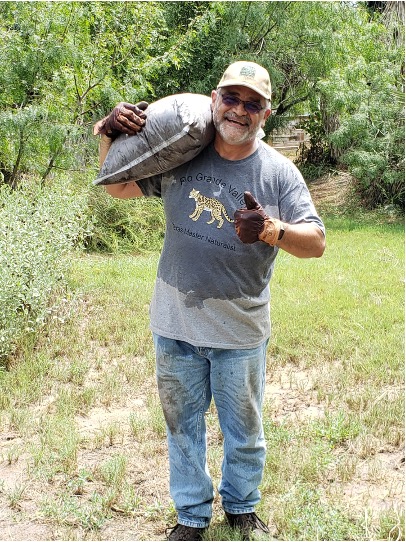
By Roberto Gaitan
Special to the PRESS
It is true that our native plants have evolved over thousands of years to survive our summers in the Rio Grande Valley. Though we can water all we want, assuming we do not experience extreme watering restrictions, the heat may still be too much.
But there are steps we can take to offer our plants the best chance to survive and thrive in the fall.
We need to first realize that our objective is not to protect the plant, but to protect the soil. Rich, healthy soil provides physical support for the plant’s root system, consists of loose particles such that it provides gaps that allow oxygen and water to seep in, possesses an organic layer that is in a constant state of decomposition, maintains 6 to 8 inches of top soil that contains the mineral nutrients that plants need, and provides the habitat for the macro- and microorganisms that break down the nutrients in the soil into a form the root hairs can absorb. Protecting our soil during the summer and feeding the bacteria, fungi, and the many little creatures that make our soil live is paramount.
During the summertime, mulch is your best friend. If you have not done so already, a 5 to 6-inch layer of mulch around your plants and trees will shade the soil and slow the evaporation of our precious water. The organisms in the soil will not only be able to survive, but they will begin to feed on the mulch and add its nutrients into the soil. As a reminder, make sure the mulch does not touch the trunk of any woody plant. Keep the mulch 2 to 3 inches away so the trunk of the plant will not have to deal with too much wetness near the trunk. The excess water from the damp mulch will prevent proper gas exchange at the trunk and promote root rot.
Once summer officially begins on Friday, June 20th, the longest day of the year, it is time to monitor your plants. Of course, many of us have already started to worry about our plants as the heat and humidity have settled in. The easiest way to test for moisture is move the mulch away from a small area and press your finger into the soil to a depth of 3 to 4 inches. If it is still damp, your plants are fine. The worst thing we can do to our native plants is overwater. It is best to let them dry out.
Testing for dampness is vital for young plants. Once your plants have been established, 2 to 3 years, water based on the plants’ needs (low, medium, or high). It is important to group plants that have similar water needs to avoid over- or under-watering some. It is also important to understand that our native plants may drop their leaves and enter a state of dormancy if the summer is severe. Leaf drop is an adapted response to the weather just like the small leaves and thorns help plants conserve water and survive the heat from our afternoon summers.
Extreme heat cannot be solved with more water.
If your garden consists of potted plants, you will need to test for moisture more frequently possibly move your pots so they get some shade in the afternoons. As with plants in the ground, mulch should be added to pots to protect the soil and slow down evaporation. Because the pot surface is exposed to the heat, the soil is exposed to the heat from all sides. If you have clay pots, they, unfortunately, are good at absorbing the heat, and the porous nature of the clay allows the moisture to escape quickly.
A dry, hot summer is not the end to gardening. Our native plants have been living through many hot summers before the earliest explorers discovered the RGV. However, these few simple tips can help our gardens thrive in today’s climate.








Comments