By TRINA “INDI” JOHNSON
Special to the PRESS
Every summer on South Padre Island follows a rhythm that’s been reluctantly accepted. Breezes blowing.
Crowds swelling. Tar balls arriving. After tangled sargassum drapes the shoreline, dark clumps of sticky tar
are quietly and repeatedly pushed ashore, clinging where they land and staying longer than anyone prefers.
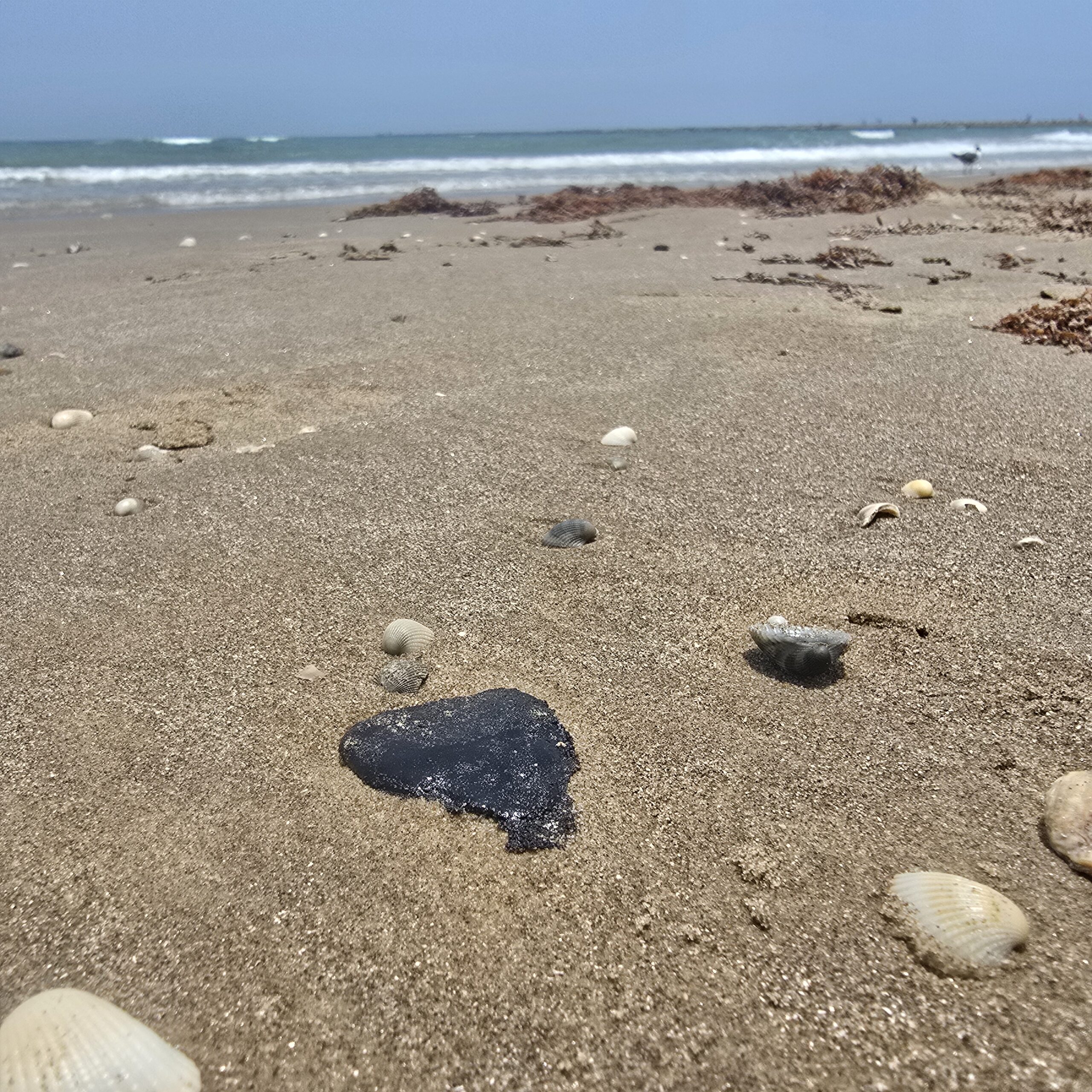
Seaweed comes first, strewn in thick, stubborn mats. Not long after, tar balls appear—small, hardened
globs of oil that stick aggressively and clean off reluctantly. “They were all over my kids’ toes,” said one
father outside a shop on Padre Boulevard. A local overheard, handed over diaper wipes, and offered the kind
of smile that comes from too much experience. “These are the ticket to clean those feet quick and easy,” she
said.
On social media, the buzz has grown quickly. Visitors unfamiliar with the region’s summer habits are
asking loudly and repeatedly if there’s been a spill. Images of tar-streaked feet and stained sandals are being
posted. Travel forums and Facebook groups have filled with speculation and cleanup advice. Locals weigh
in with practiced calm.
Tar balls form naturally when crude oil seeps slowly and invisibly from cracks in the Gulf of Mexico’s
seafloor. Once on the surface, the oil weathers under sunlight and thickens. Sand and shell fragments cling.
Hardened, the blobs drift until tides drop them ashore. According to the National Oceanic and Atmospheric
Administration (NOAA), about 1,300 barrels of oil are released each day from natural seeps in the Gulf.
“It’s probably a 10-mile stretch of beach that has a one to two percent coverage on it right now,” stated
Raymond Oliveira, Regional Director for the Texas General Land Office Oil Spill Prevention and Response,
in an interview with KRGV.com. “We have over 600 natural seeps in the Gulf of Mexico. We do not have a
report right now of an active offshore spill. We have a 24/7 hotline. So does the Coast Guard.”
As Gulf waters warm gradually and then quickly, tar balls become more mobile. “Increased water
temperatures in summer enhance oil mobility, leading to more tar balls,” NOAA explains (“Tarballs,” 2023).
“It’s a natural process we see annually,” said Dr. Wes Tunnell, a coastal ecologist with the Harte Research
Institute at Texas A&M University–Corpus Christi. “The Gulf’s seeps have been active for millennia, and
tar balls are just part of the ecosystem” (Texas Monthly, June 2024).
Cleanup advice has circulated widely. Diaper wipes are the go-to recommendation for feet and skin.
Mineral oil and dish soap are also effective for more stubborn spots. WD-40 is commonly used for cleaning
tar from shoes and other gear. Pet owners are advised to keep animals away from the water, as tar sticks
quickly to fur and is difficult to remove.
Brief contact is not considered hazardous, according to NOAA, though those with sensitive skin may feel
irritation. Even with tar in the sand, South Padre’s summer has not stopped. It is just sticking a little more
than usual.








Comments