
Moments in Time is a collection of recovered newspaper briefs and other publications, compiled by local historian, Steve Hathcock, offering a look back at the history of the Rio Grande Valley.
Steve Hathcock is a local historian and a regular columnist for the Port Isabel South Padre Press. He has spent many years collecting and sharing the history of the Rio Grande Valley, as well as treasure hunting and formerly owning an Island-based bookstore.
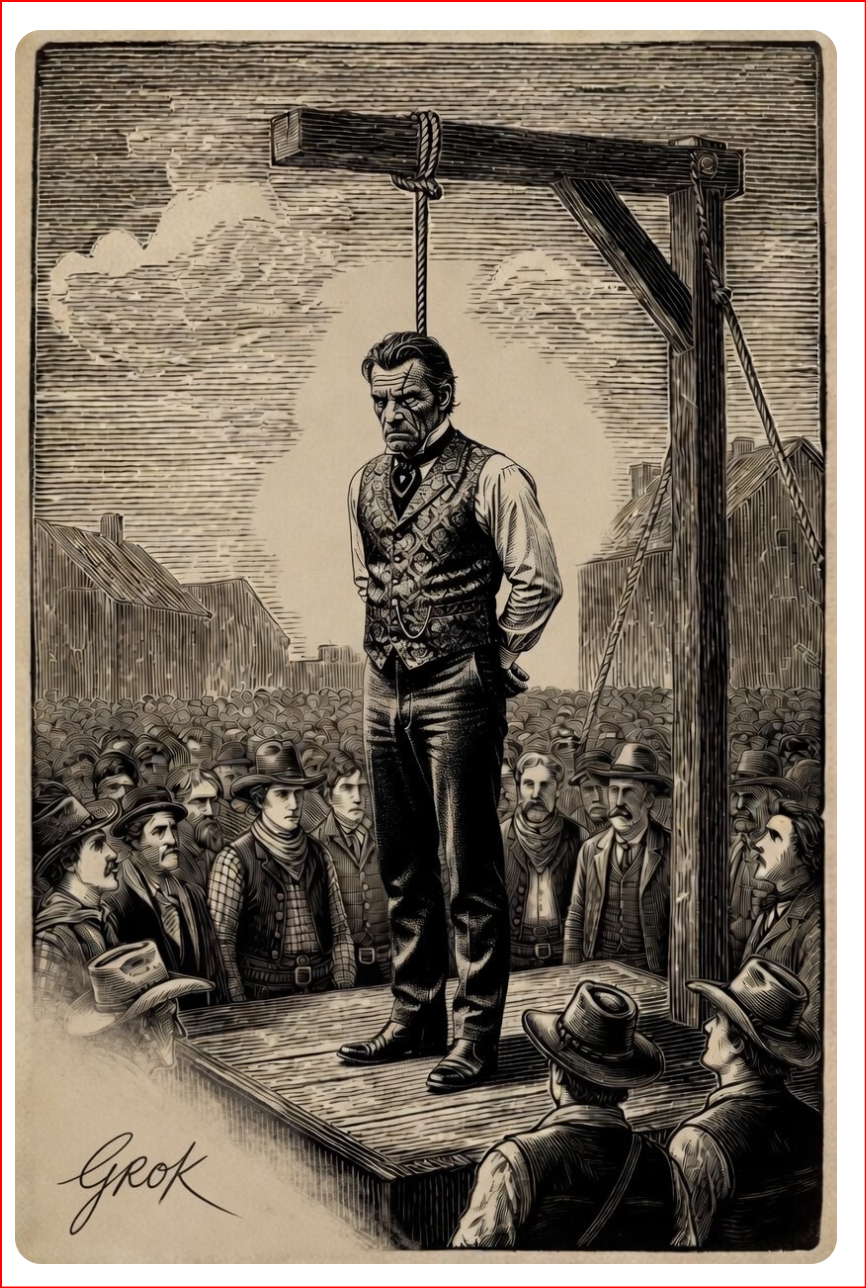
MURDER AND LYNCHING.—On last Thursday morning, the 11th of July, the citizens of Brownsville, Texas, were astonished with the melancholy intelligence that Justice Bacon, in consequence of the death of the coroner, had been called to hold an inquest over the body of Capt. John Brennan, who had been murdered in cool blood by the notorious Bill Hardy, both recently from Galveston. It appears that the above two, with a number of others, were at one of the fandango houses, where they remained till between one and two o’clock in the morning, when Capt. Brennan left his place of lodging. He had not proceeded far when he was overtaken by Hardy, who drew his knife, and thrust it to the hilt in Brennan’s left breast. Seeing Hardy’s movements, he threw up his hands, and exclaimed, “Bill, don’t cut me.” It was too late; the fatal stab came too quickly and too certain for him to avoid it. He ran some 30 or 40 yards, fell, and soon expired. Hardy was arrested next morning, about daylight, near one of the ferries, was ironed, and taken to gaol. The people resolved to meet out justice to the murderer, and they accordingly assembled and demanded the culprit of the deputy sheriff, who was obliged to deliver up the latter into their hands. On reaching the spot selected for this tragic scene, he remarked that he knew he had to die and intended to die like a man; but would rather be shot than hung. The crowd assembled to witness the solemn tragedy was quite large, but orderly and quiet, with a few exceptions. No one volunteering to shoot the guilty wretch, it was decided that he must be hung. During all this time, and even while the arrangements were making for launching him into eternity, where he would meet a more dreadful tribunal than any one on earth, he evinced the most perfect indifference as to his fate, not suffering a muscle of his face or limbs to betray the least emotion, and even took the rope that was to hang him and tied the hangman’s knot, to show how it was done, without the slightest perceptible tremor of the nerves. Those managing the matter, fearing the knot was not well tied, untied it for the purpose of re-tying, in which they failed, when he remarked to a gentleman standing near him that he would have to tie it again. This kind office the individual addressed promised to perform for him. The doomed man then got into a cart, mounted on a plank which rested on the wheels, without any resistance or assistance, and while the rope which was suspended from a beam used for hoisting beeves, was being adjusted round his neck, asked to have his hands tied behind him. There he stood, high above the crowd, his hands tied, the noose close about his neck, death staring him in the face, calm, cool, and collected. The cart moved from under him, and in this condition he was hurried into eternity. He died after a slight struggle and thus terminated the earthly career of Bill Hardy. He met death with the same reckless indifference that he had meted it out to others.
(Chester Chronicle, and Cheshire and North Wales General Advertiser (UK) Aug 31, 1850)
Editor’s note: • This event occurred during a very lawless period in the Lower Rio Grande Valley, shortly after the Mexican-American War. Brownsville was a rough border town with frequent violence, gambling, drinking, and ethnic tensions between Anglo-Americans, Tejanos, and recent arrivals from elsewhere (Hardy and Brennan were both “recently from Galveston”). Vigilante “justice” and lynchings were unfortunately common in frontier Texas when locals felt the legal system was too slow or unreliable.







Comments